Hard water in Tucson leaves mineral scale inside pipes, faucets, water heaters, and appliances. Over time, that scale restricts water flow and makes water heaters less efficient. It also adds to your cleaning and maintenance load and can shorten the life of some plumbing equipment. Tucson Water says its hard water is safe to drink, so the concern is wear on your home rather than your health.
If you’ve scrubbed white crust off a faucet or noticed spots on every glass coming out of the dishwasher, you’ve already seen what Tucson’s water does. Here’s what’s happening and how to protect your home.
What Is Hard Water?
Hard water contains high levels of dissolved calcium and magnesium. When that water is heated or evaporates from a surface, the minerals stay behind and harden into scale.
The U.S. Geological Survey classifies water hardness this way:
| Hardness (mg/L as calcium carbonate) | Classification |
| 0 to 60 | Soft |
| 61 to 120 | Moderately hard |
| 121 to 180 | Hard |
| More than 180 | Very hard |
Why Is Tucson’s Water So Hard?
Tucson’s water picks up calcium and magnesium naturally from its sources. Tucson Water notes that hardness rises as the share of Colorado River water delivered through the Central Arizona Project (CAP) increases. Hardness can vary by neighborhood and over time, so your home’s level may differ from a general citywide figure.
How Does Hard Water Affect Plumbing Pipes?
Scale builds up on the inside walls of pipes and narrows the space water can flow through. The USGS notes that long-term scale buildup can reduce a pipe’s inside diameter and restrict water movement.
This happens slowly, so the main symptom is flow that gets a little weaker year after year. Hard water is only one possible cause of low water pressure in a Tucson home, though. A sudden drop usually points to a leak, a valve problem, or the water supply instead.
Can Hard Water Clog Faucets and Showerheads?
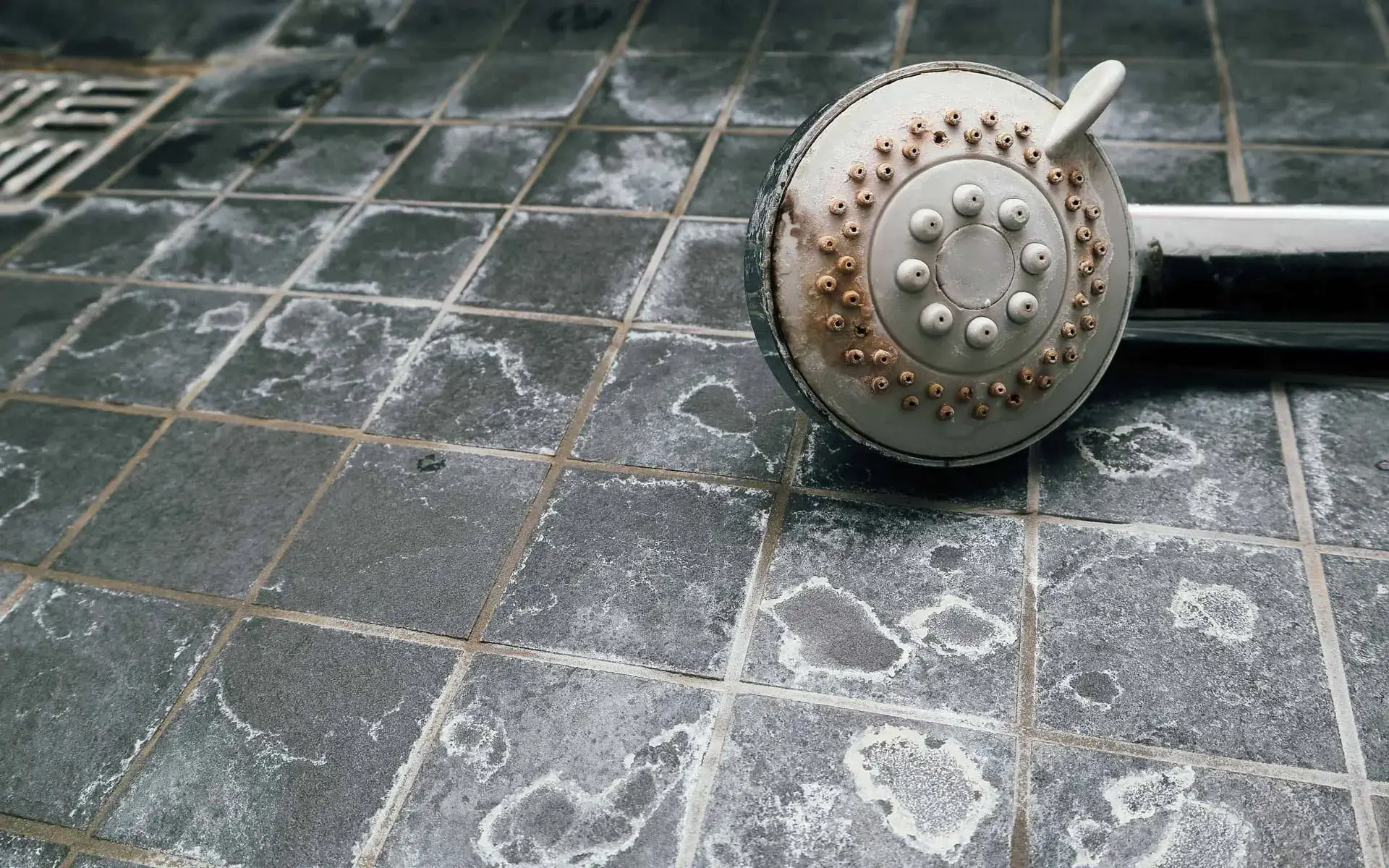
Yes. Tucson Water lists clogged showerheads and faucet aerators among the most common hard water problems in the area. The small openings in these fixtures catch mineral deposits first.
If one fixture has weak flow while the rest of the house is fine, unscrew the aerator or showerhead and soak it in vinegar to dissolve the scale. Replacing a heavily scaled fixture is usually inexpensive. If several fixtures keep clogging, it’s a sign the water itself needs attention.
How Does Hard Water Affect Your Water Heater?
Water heaters take the biggest hit from hard water because heat speeds up scale formation. Minerals settle at the bottom of the tank and coat the heating surfaces.
The EPA’s 2026 WaterSense guide to water softeners explains that scale decreases heat conductivity, so water heaters operate less efficiently. The same guide notes that hard water can shorten the life of water heaters.
You may notice popping or rumbling sounds from the tank, less hot water than you used to get, or longer recovery times. Tucson Water recommends flushing your water heater regularly and setting it to 120 to 125 degrees to help manage buildup.
Hard water doesn’t guarantee an early failure. Tank type, usage, and maintenance all play a part. If your water heater is struggling, a plumber can tell you whether scale is the issue or something else is going on. Signature Heating, Cooling & Plumbing handles water heater repair and replacement across the Tucson area.
How Does Hard Water Affect Household Appliances?
Tucson Water specifically lists evaporative coolers, dishwashers, coffee makers, and washing machines as appliances where calcium deposits build up. Anything that heats or evaporates water is especially vulnerable.
Dishwashers
Hard water causes spotting and streaking on dishes and leaves a cloudy film on glassware. Scale can also collect inside the machine. Detergents and rinse aids made for hard water help, along with the manufacturer’s cleaning instructions.
Washing Machines
The EPA notes that hard water can reduce the life of washing machines. Calcium and magnesium also interfere with detergent, which can leave clothes looking dull.
Evaporative Coolers
Swamp coolers work by evaporating water, which leaves minerals behind on the pads and in the reservoir. Many Tucson homeowners replace pads and clean out scale every season for this reason.
Coffee Makers and Small Appliances
Coffee makers heat water over and over, so they build up scale quickly. Follow the manufacturer’s descaling instructions, since recommended products and methods vary by model.
What Are the Signs of Hard Water in Your Home?
The most common signs Tucson homeowners notice are:
- White, chalky residue on faucets and showerheads
- Spots or film on dishes and glassware
- Soap and shampoo that won’t lather well
- Aerators and showerheads that clog repeatedly
- Popping or rumbling from the water heater
- Soap scum that’s hard to scrub off
One sign alone doesn’t confirm hard water, but several together usually do.
How Can You Test Your Water Hardness?
Tucson Water suggests using a pool test kit to check your home’s hardness level. Test strips from a hardware store work too. For more detail, you can contact Tucson Water’s water quality team or have a plumber test the water before recommending any treatment.
Knowing your actual number matters if you’re considering a water softener, since it determines how the system should be sized and set.
Is Hard Water Safe to Drink?
Yes. Tucson Water states that hard water is safe to drink and is not a health risk. Hardness is a household nuisance because of what it does to plumbing and appliances, not a water safety problem.
Do You Need a Water Softener in Tucson?
A water softener is worth considering if scale keeps clogging fixtures, your water heater is showing buildup, or you’re tired of fighting spots and residue. It isn’t necessary for every home, so test your water first.
Most softeners use ion exchange, swapping the calcium and magnesium for sodium or potassium so scale can’t form. Softeners use water and salt when they regenerate, so efficiency matters. The EPA’s water softener guide recommends choosing a model that’s both water-efficient and salt-efficient, and having it sized and set for your home’s actual hardness.
Signature Heating, Cooling & Plumbing installs water softeners and reverse osmosis systems in Tucson, Oro Valley, Marana, Sahuarita, Vail, Green Valley, and the Catalina Foothills.
How Can You Protect Your Plumbing From Hard Water?
Even without a softener, regular upkeep goes a long way:
- Clean aerators and showerheads when you see buildup.
- Flush your water heater on the schedule its manufacturer recommends.
- Descale appliances according to their instructions.
- Service your water softener if you have one.
- Have declining water flow checked before it gets worse.
When Should You Call a Plumber About Hard Water?
Call a plumber when buildup affects several fixtures, water flow keeps declining, or your water heater is making noise or running short on hot water. A plumber can confirm whether hard water is the cause or whether something else is involved, and help you decide if treatment makes sense.
Frequently Asked Questions
Is Tucson water hard?
Yes. Tucson Water describes its water as hard because of naturally occurring calcium and magnesium. Hardness tends to rise as more CAP water is delivered.
What does hard water do to plumbing?
Hard water leaves mineral scale inside pipes and fixtures. Over time, that buildup restricts water flow and clogs aerators and showerheads.
Can hard water damage a water heater?
Scale reduces heat transfer, so the water heater runs less efficiently. The EPA notes that hard water can shorten the life of water heaters.
Is hard water safe to drink in Tucson?
Yes. Tucson Water states that hard water is safe to drink and is not a health risk.
Does a water softener remove hard water minerals?
A conventional softener uses ion exchange to remove the calcium and magnesium that cause hardness. The EPA recommends choosing a water- and salt-efficient model.
Get Help With Hard Water in Tucson
If hard water is clogging your fixtures or wearing on your water heater, call Signature at (520) 201-8043 or request a free estimate online to talk about testing and treatment options.